Pages

Showing posts with label cooking. Show all posts

Wednesday, November 26, 2014

Recipe: Compound Butters

Compound Butters
Circa: 2014

 With Thanksgiving approaching I thought I would share one more recipe with you before Thursday!  I love making compound butters for special dinners or  during the holidays. Not only are they delicious and add so much flavor to a dish but they are very simple to make! Today I am providing you with some of my favorite flavor combinations to share with your friends and family this holiday season.
 
When I became Education Coordinator at the museum one of the first things I learned to do was make homemade butter. During our busy season we can make up to six batches in one day! At the museum we use a wonderful vintage Daisy Churn similar to the one pictured in the ad below. While it still gets the job done after all these years it tends to take a lot of time and elbow grease. It's a wonderful teaching tool for our younger visitors and helps them appreciate how hard people had to work in the past even for simple things, however,  at home I like to take advantage of our modern technology and let my mixer do the hard work!  While you can certainly add any of these flavorful ingredients to pre-made butter, homemade butter is so easy to make and adds a delicious and special touch to your holiday meal.
 
 
How to Make Homemade Butter
 
To make homemade butter all you need is heavy whipping cream and a stand or hand held mixer. You will typically get half as much butter as the amount of cream used.
 
1.  Place the heavy whipping cream in a bowl and begin mixing on a low speed. You can increase to a medium speed as the cream begins to thicken. However, be careful not to increase the speed too soon or you will have cream flying everywhere! (I learned this the hard way)
 
2. The cream will transform into fluffy whipped cream; this is what I consider the half way point. Keep whipping the cream until it breaks down into soft cottage-cheese like curds.
 
3. The butter will then begin to stiffen as the butter fat separate s from the milk, clump together and turn yellow.
 
4. Once the butter separates turn off your mixer and pour off the milk. You can press the butter with a spatula to squeeze out any remaining milk.
 
5. As a bonus you can keep the buttermilk to drink!
 
It is that simple! I often get asked "How do you know when you have butter?" Trust me you will know by the consistency and color of the butter.  At this point in time I return the drained butter to my mixer and begin to add my ingredients. Rather than provide measurements for my butter combinations I have found that it is all about personal taste. For example, I love a lot of fresh basil with my lemon zest, however my husband prefers just a touch. Also if you are making small batches you may need a teaspoon of an ingredient rather than a tablespoon. I suggest adding a little bit at a time until you reach the perfect combination! For my savory butters I also added a touch a kosher salt.
 
I hope that these combinations inspire you to create your own delicious compound butters!
 
Here are my favorite combinations below!
 
 
I love the combination of lemon zest and fresh basil from my garden. They create a delicious and fresh flavor combination that works well on everything from a baguette to a roasted chicken!
 
 
 Roasted Garlic and Rosemary is my husband's favorite! I roast a head of garlic in the oven, extract the garlic and let it cool in a dish before I add it to my butter.
 
 
My favorite way to serve my cinnamon and honey butter is on my husband's homemade cornbread while it is still warm from the oven.  
 
 
Once you have created your compound butters I suggest rolling them in plastic wrap or parchment paper and placing them in the refrigerator to chill for at least 30 minutes to an hour before serving. They make a wonderful addition to any holiday table! 
 
 I hope that you have a very Happy Thanksgiving with your family and friends! Peace and Love always!

Wednesday, September 17, 2014

Recipes: Fried Okra

Fried Okra
Circa: 1870's

             
            Today I am bringing you a dish that is near and dear to my heart: my grandma’s pan-fried okra! I have loved this dish since I was a little girl and it is always my first request when I get to go home to visit my family in Paris. It’s a unique recipe in the sense that there isn’t necessarily a recipe. It’s a pinch of this, dash of that, and handfuls of a great southern staple:  cornmeal!

This year Chris planted a wonderful garden in our backyard and we have been enjoying fresh tomatoes, squash, and cucumbers, and this weekend, we harvested our first batch of okra.  We also had a wonderful “staycation” and spent the weekend in downtown Houston, Texas, including a visit to the OKRA Charity Bar for delicious cocktails and fried okra!  Of course, we could only be inspired to combine the two with our Sunday night dinner! I called my grandma to get her infamous recipe, pulled out the skillet, and went to work.  Even though our’s was delicious, it will never be as good as my grandma’s.  But I think that’s how it is supposed to be! So please enjoy our take on classic pan fried okra and our serving of a little history on this classic southern dish!


                    Like so many Southern staples, the origins of fried okra aren’t exactly clear beyond simply pan frying the fresh meat and vegetables growing right outside the door.  What is clear, however, is that okra itself is actually native to Africa and came to America early in the 1700s.  It is actually a member of the Mallow family and related to cotton, hibiscus and hollyhock.  While it was originally used to thicken soups and stews, people quickly caught on to its many delicious uses!  Even Thomas Jefferson, a master gardener himself, valued okra as one of Virginia’s best garden plants.

                     With regard to the southern tradition of frying okra, the earliest recipe I could find was from 1870, and simply says “cut them in thin cross slices, sprinkle meal over them, and fry crisp.”  Apparently, not much has changed! For our recipe, we prefer to fry our okra in a cast iron skillet for extra flavor and easy clean-up, but almost any sturdy frying pan will do. You may notice that I didn't include any measurements and to be honest that's because there really aren't any. It all depends on how many people are coming over for dinner; as long as you have enough cornmeal to coat the okra you are good to go!  Finally, everyone has their own preference, but if it’s not extra crispy and slightly burnt then it’s not real fried okra in our house!


Wednesday, July 23, 2014

Recipes: Hemingway's Gin and Tonic

Hemingway's Gin & Tonic 
Circa: 1930's


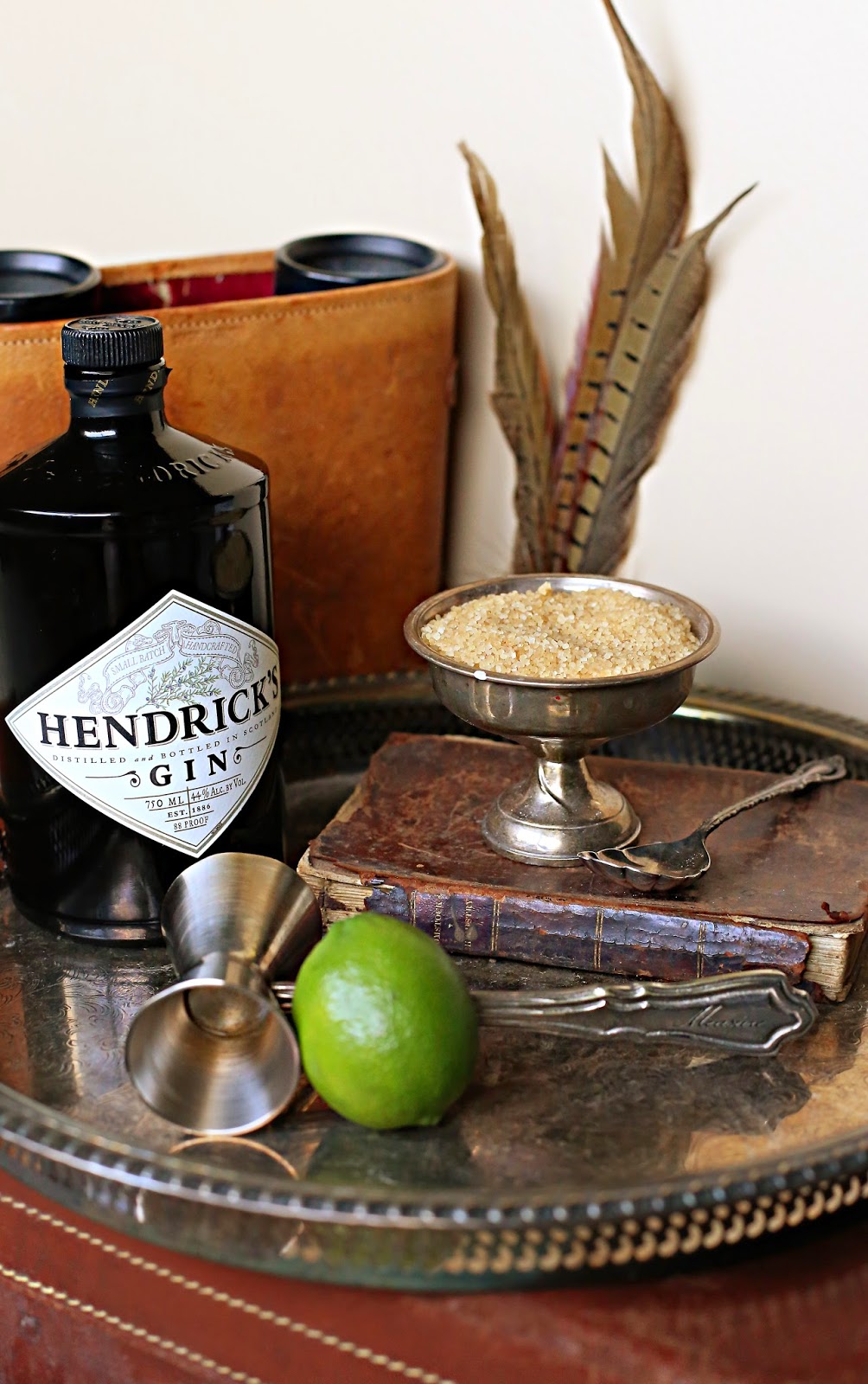
      Today I am sharing with you my go-to drink for the summer! I must give credit to my husband for introducing this delicious drink to me. As many know, Texas this time of year can only be described as HOT! Therefore, the cooler and more refreshing the cocktail, the better. Knowing that my spirit of choice is gin he shared this recipe with me and I have been hooked ever since. Legend states that this was one of famed author Ernest Hemingway's favorite drinks and hangover cures. Hemingway made the drink his own concoction with the addition of Angostura bitters to the classic gin and tonic.  Since I prefer my drinks a little bit sweet,  I added in a little spoonful of Turbinado sugar. Whether you like yours sweeter or not, the drink is still delicious.  Now, as you sip here is your history for the day! 

         The history of tonic water is fascinating!  In 1638 when the wife of the Spanish Viceroy in Peru fell ill with malaria her husband pleaded with the local Incas for an antidote. They instructed her to drink a potion containing the ground bark of the native Quinquina Tree, what we would call the first dose of quinine. Luckily for the countess, the potion worked and she made a full recovery.  Later in 1825 the British military wished to improve the taste of their very bitter, anti-malarial quinine so they decided to combine it with water, sugar, tonic and gin, a very popular British spirit! Rather than taking their medicine with the troops in the morning, the officers began enjoying theirs at cocktail hour.  The classic Gin and Tonic was born! It would become the quintessential drink of the expansive British Empire. 


     Finally, I thought I couldn't leave you without a little information about our own cocktail's namesake, Ernest Hemingway!  He was born on July 21, 1899 in Cicero, Illinois. While he was raised in the suburbs of Chicago, his family's frequent trips to their cabin in northern Michigan fostered the future sportsman's love of hunting, fishing and an appreciation of the outdoors. 

     Hemingway worked as a journalist before serving (and being wounded) in World War I as an ambulance driver in the Italian Army.  His wartime experiences later inspired his famous novel, A Farewell to Arms.  After the war, Hemingway moved to Paris and became a key part of what Gertrude Stein called "The Lost Generation." Some of his acquaintances included F. Scott Fitzgerald, Ezra Pound, Pablo Picasso and James Joyce. In 1925 after a trip to a festival with British and American expatriates Hemingway was inspired to pen one of his greatest works The Sun Also Rises

     In 1928 Hemingway moved back to America and settled in Key West Florida and continued his writing. When he wasn't working Hemingway spent much of his time chasing adventure and big game hunting in Africa, bullfighting in Spain, and deep-sea fishing in Florida. He went back to the battlefield as a war correspondent reporting on the Spanish Civil War in 1937.  His experiences again inspired a classic; this time, For Whom the Bells Tolls.   He later even used his fishing boat to help look for Nazi submarines in the Caribbean during World War II.

     In 1951 Hemingway received a Pulitzer Prize for his book The Old Man and the Sea and a Nobel Prize for his collection of works in 1954. Sadly as he grew older his mind and body began to fail him. He retired permanently to Idaho and early on the morning of July 2, 1961, Ernest Hemingway committed suicide. 

     Though it's a sad end to an incredible man, his legacy of enjoying life  keeps going.  So seize the day and enjoy your own Hemingway Gin & Tonic while enjoying one of Papa Hemingway's classics!


Sources
www.biography.com 
http://qtonic.com

Wednesday, July 9, 2014

Recipe: Old Fashioned Sugar Cookies

Sugar Cookies 
Circa: 1700's 


           Since today is National Sugar Cookie day I thought that there was no better time to share a great sugar cookie recipe and a little history behind this sweet treat! Oddly enough, many historians actually believe that the origin of cookies arose out of necessity rather than want. Before the creation of our more modern stoves bakers throughout history worked with ovens heated by fire. Finding the right temperature could prove difficult when you weren’t able to turn a dial or even better punch in 350 degrees. In order to test the heat they began baking a small amount of batter to ensure they had the correct temperature. Well, who could resist a mini cake… no one! So bakers began selling the mini-cakes and the cookie was born. However then they were known by many names including jumbles, cry babies, plunkets, gemmels and even gimblettes! However a cookie by any other name is still a cookie!

          The cookie’s arrival to America has been attributed to Dutch settlers in New York who made a small cake known as a koekje pronounced cookie.  While there were similar cakes found in Europe the koekje was unique because it utilized a new innovation at the time: chemical leavening. The alkali leavener pearlash was first in use in the 18th century around New York City and the first published recipe for “cookies” appeared in 1796. In the days before modern refrigeration and food preservation, non-leavened food grew in popularity because it could be dried and stored for many months.

          The modern sugar cookie we have all grown to love dates back to the 1700s in Nazareth, Pennsylvania. German Protestant settlers created a crumbly, buttery round cookie that became known as the Nazareth Sugar Cookie. Over the years the Nazareth Sugar Cookie grew in popularity leading to House Bill of 1892 that made it the official cookie of the Commonwealth of Pennsylvania.

          With the rise of industry and processed food, the sugar cookie gained the delicious addition of vanilla! Before this ingredient became a pantry staple it was very expensive and difficult to acquire. Now with artificial vanilla widely available and affordable people began adding it to everything! By the 1920s people were using it so much that it became known as “plain vanilla!” Over time the cookie continued to grow in popularity and in 1948 Betty Crocker’s Cook Book included a recipe for Rolled Sugar Cookies and it has been a family favorite ever since! So put on your cute vintage apron head to the kitchen and celebrate National Sugar Cookie Day!


I had to include this cute behind the scenes shot! She always joins me when I am shooting, especially if there is food involved! 

Thursday, June 26, 2014

Recipe: Fried Green Tomatoes

Fried Green Tomatoes
Circa: 1900's
 
                I couldn’t imagine starting my weekly recipe series with anything other than Fried Green Tomatoes! I love the delicious combination of the slightly tart warm tomatoes with a crunchy cornmeal coating.  If you are like me you were probably first introduced to fried green tomatoes by the 1992 film based on Fannie Flagg’s novel Fried Green Tomatoes at the Whistle Stop Café. Is there anything more classic and southern than this dish?  Well the truth might surprise you.


                As a history lover I was interested in the origins of the dish and set out to do a little research of my own.  I began with Miss Flagg herself and the cookbook The Original Whistlestop Café Cookbook in which she reveals that:
 
                “The Irondale Café was started by my great aunt Bess in the thirties… just outside my hometown of Birmingham. Virginia Johnson, that fabulous cook who first went to work for my aunt when she was eleven can still be found in the kitchen happily frying up a fresh batch of fried green tomatoes every day, the same kind that I, along with generations of others have enjoyed since we were children.”
 
                While Fannie Flagg reminisces about enjoying fried tomatoes as a child, it was hard to find further evidence that this was a traditional southern dish. Actually, most of the sources that I found attributes the dishes’ origins to Jewish Immigrants in the Northeast and Midwest at the turn of the century. Robert F. Moss, a food historian and writer found recipes for the Fried Green Tomatoes in the 1919 International Jewish Cookbook as well as newspapers and magazines by the early part of the 20th century. He found nothing in southern cookbooks and very little in the newspapers.
 
                While the origins of Fried Green Tomatoes in the south is unclear,  in recent years I think that it is safe to say it is a southern staple! I hope you enjoy!!


Recipe:  Diana Swenson-Siegel www.allrecipes.com